
THE SHORT ANSWER
Bad conduct can deserve correction even when an EEO legal label is uncertain. Describe the behavior, identify any protected-basis connection and ask for the specific change needed.
What to keep in mind
- Do not minimize harmful behavior because the legal label is unclear.
- A federal hostile-environment analysis is more specific than a toxic workplace description.
- Separate conduct, workload and discrimination questions in the report.
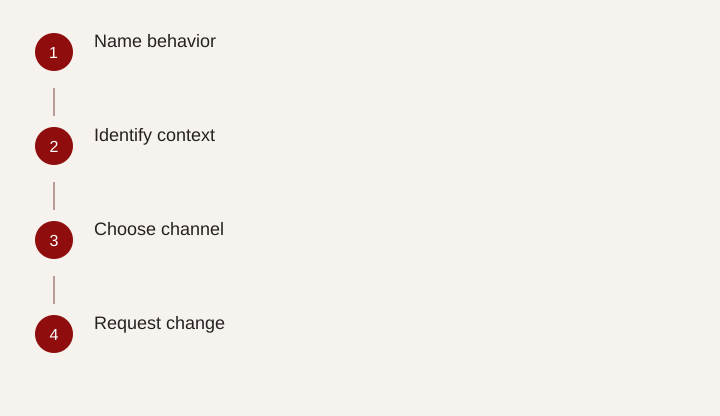
- Name behavior
- Identify context
- Choose channel
- Request change
Describe the problem without inflating the label
People use hostile work environment to describe a workplace that feels miserable, intimidating or exhausting. In employment law, the phrase has a more specific meaning. That difference matters when choosing a reporting route, but it should not be used to dismiss harmful behavior.
Start with verbs: the manager shouts, changes deadlines without notice, calls employees names, excludes someone from required meetings or makes ethnic jokes. Then describe frequency, context and work consequences. A reader can evaluate conduct more readily than a label such as toxic.
You do not need to choose between saying nothing and claiming a proven legal violation. “This conduct is interfering with my work, and I am asking for it to be reviewed under our policy” is a valid practical request. If you also suspect discrimination, explain the factual connection rather than assuming the word harassment communicates it.
Understand the EEO distinction
The EEOC harassment overview describes unlawful harassment tied to protected characteristics and explains that seriousness, repetition and context matter. Ordinary annoyances do not automatically satisfy that standard, while an extremely serious incident can have significance without a long pattern.
A supervisor who insults every employee may be a poor manager without every insult becoming an EEO violation. A supervisor who repeatedly uses national-origin slurs or conditions opportunities on tolerating sexual conduct raises different issues. The examples are not interchangeable, and a legal assessment depends on more than whether the workplace is unpleasant.
An employer can set a higher behavioral standard than the minimum required by law. A policy against bullying, disrespect or abusive communication may therefore be useful even when the discrimination connection is unclear. Ask which policy applies rather than abandoning the concern because one legal label may not fit.
Separate the issues in a mixed situation
Many workplace problems contain several strands. An excessive workload, a public insult and an ethnic remark may occur in the same week. Grouping them together as one toxic environment can hide the different decisions needed.
Use a short issue map. For workload, ask about priorities, staffing and realistic deadlines. For general conduct, identify the behavior and reporting policy. For possible discrimination, identify the characteristic or protected activity you believe is involved and the facts supporting that concern. For an immediate threat, use the relevant urgent safety route.
A hypothetical employee working long hours might ask for reprioritization while separately reporting a supervisor's repeated comments about their nationality. Resolving the schedule problem would not necessarily answer the discrimination concern. Conversely, an investigation into the comments would not automatically establish which project deadline should move. Clear separation helps prevent one issue from being used to dismiss another.
Use a concern-to-channel worksheet
The worksheet is a starting point for asking who handles an issue, not a legal classification engine. Verify the actual contacts and procedures at your workplace.
| Concern | Information to prepare | Question for the organization |
|---|---|---|
| Workload or conflicting demands | Tasks, deadlines, hours and dependencies. | Who can set priorities or allocate resources? |
| Abusive communication | Specific words, settings and repetition. | Which conduct policy and reporting route apply? |
| Possible discrimination | Employment decisions and the possible protected-basis connection. | Who reviews discrimination concerns? |
| Later treatment after reporting | Original activity, changed treatment and explanation. | How should a potential retaliation concern be submitted? |
If one person handles multiple categories, keep the categories in your own notes anyway. That makes follow-up more precise: “The workload request was addressed, but I have not received a response about the repeated remarks.”
Ask for a change that can be observed
A practical request should describe what would improve the working arrangement. “Please communicate corrections privately unless an immediate operational issue requires otherwise” is more concrete than “Make my boss nicer.” “Please confirm which of these three deadlines takes priority” gives management a decision to make.
For conduct, state the behavior you want stopped and the effect it has. You can write: “During the last three team meetings, I was called [accurate words]. The interruptions prevented me from completing the status report. I am asking that feedback be delivered without personal insults and that the conduct be reviewed.”
Do not add a protected-basis claim that you do not believe or cannot explain. At the same time, do not hide a genuine discrimination concern under vague language about personality conflict. The recipient needs to understand the nature of the issue to route it appropriately.
Evaluate the response and your options
Look for a specific response: clarified priorities, a conduct expectation, an assigned reviewer or a follow-up date. You may not control whether the employer disciplines someone, but you can observe whether the behavior and work conditions change.
If you experience new treatment after raising a discrimination-related concern, document it separately. The EEOC retaliation guidance distinguishes relevant protected activity from a blanket exemption from workplace rules. Do not assume that every general complaint creates identical legal protection.
A workplace can remain a poor fit even after the legal question is clarified. You can consider an internal move, external search or support resources while keeping the factual report accurate. The point of distinguishing labels is to choose a useful response, not to persuade yourself that damaging conduct is acceptable simply because one legal theory may not apply.
Related questions
Is a manager who insults everyone automatically violating EEO law?
Not automatically. EEO analysis asks additional questions, including whether prohibited considerations are involved. General abusive management may still violate employer rules or raise other concerns.
Should I wait until behavior meets a legal threshold before reporting?
No. An employer's conduct policy can address problems before they become unlawful. You can report concrete behavior and its work impact without declaring the legal outcome.
Sources & further reading
Primary references
Community questions behind this guide
These discussions informed the question and language. Personal accounts are not verified facts or professional advice. Read our method.