
THE SHORT ANSWER
Evaluate a federal move as a specific offer, not a general promise of stability or better benefits. Compare confirmed terms with your real budget and the work you want to do.
What to keep in mind
- Use the offered rate and appointment terms rather than the top of a salary range.
- Compare worksite costs, schedule and duties alongside compensation.
- Test the decision without assuming rapid promotion or an approved pay exception.
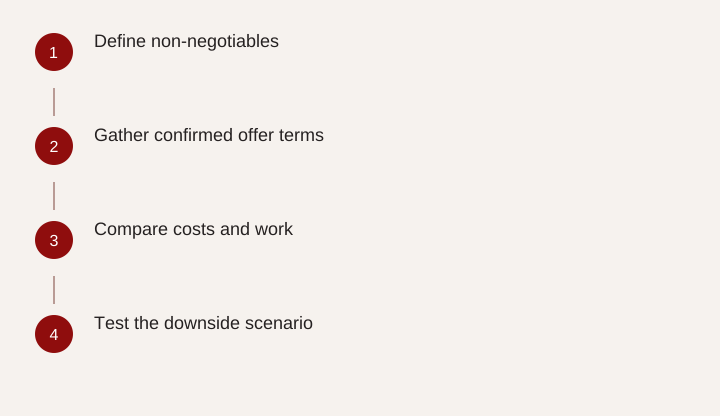
- Define non-negotiables
- Gather confirmed offer terms
- Compare costs and work
- Test the downside scenario
Evaluate the offered job as a complete change
A career change can promise meaningful work, a different schedule or a path away from physically demanding duties. It can also introduce a lower starting income, a longer commute or unfamiliar responsibilities. The useful question is whether this specific federal offer fits your needs, rather than whether federal employment is generally better than your current sector.
Write down why you are considering the move. Separate the problem you want to solve from the benefits you merely hope will follow. If the main concern is physical workload, ask about the actual duties. If it is schedule predictability, ask about shifts, travel and overtime expectations. If it is advancement, confirm the position's promotion potential and requirements. A change can solve one problem while creating another, so make the tradeoff explicit before comparing salaries.
Use the actual pay terms
Start with the offered pay system, grade, step or rate, duty station and work schedule. OPM's General Schedule overview explains the structure of GS grades and steps and the role of locality or special rates. A range on an announcement does not establish where your individual offer will fall. Confirm the relevant schedule and annual or hourly basis with HR.
Do not budget using a hoped-for negotiation result. OPM's superior-qualifications authority is discretionary, has eligibility requirements and requires approval before entry on duty. It also prohibits using nonfederal salary history or competing-offer salary under that authority. If you request consideration, keep the approved amount separate from the requested amount. Compare gross pay accurately, then use reliable payroll or benefits information to estimate deductions. A gross annual difference alone does not describe the change in spendable income.
Build a decision sheet with real numbers and explicit unknowns
Use your own records for current expenses and the agency's confirmed information for the new role. Leave uncertain fields open instead of filling them with averages that may not apply.
| Area | Current situation | Proposed role | Evidence needed |
|---|---|---|---|
| Compensation | Actual recurring pay | Confirmed offer | Pay basis and applicable schedule |
| Worksite cost | Commute, parking and travel | Expected recurring cost | Attendance and travel requirements |
| Schedule | Hours and variability | Stated expectations | Supervisor and formal terms |
| Benefits | Current coverage and contributions | Applicable options | Eligibility, costs and effective dates |
| Physical demands | Tasks you perform now | Actual offered duties | Announcement and manager clarification |
| Development | Skills and progression available | Documented opportunities | Conditions and realistic support |
Add one-time transition expenses separately from recurring costs. Moving, temporary lodging or equipment you choose to buy can affect the first months even if the ongoing budget is workable. Count reimbursement only when the agency has authorized it under the actual offer.
Ask benefits questions without assuming universal answers
Benefits can matter greatly, but their value depends on eligibility, plan choices, costs, service history and your household. Ask the agency's benefits contact for the materials relevant to your appointment. Compare coverage details and effective dates rather than relying on a general statement that federal benefits are better.
Retirement, leave and insurance questions may require more information than the hiring manager has available. Route them to the responsible office and keep the response with your decision sheet. If you have prior service, ask how it is treated instead of assuming every period counts the same way for every purpose. Do not convert a potential long-term benefit into cash available for next month's bills. Separate current affordability from future value so a favorable long-term possibility does not conceal an immediate shortfall you cannot manage.
Test the decision under less favorable conditions
Create a conservative scenario using the confirmed entry rate, required attendance and known expenses. Assume that a hoped-for promotion or schedule change takes longer than expected. Ask whether the role still works financially and practically. This does not predict failure; it measures how dependent your decision is on uncertain improvements.
The USAJOBS announcement overview helps identify appointment type, work schedule and promotion potential. Review those fields carefully and confirm material terms in the offer. Do not assume all federal appointments provide identical permanence or that a work arrangement can never change. Consider how you would respond if the commute proved harder than expected or advancement were delayed. If the only workable scenario requires several unconfirmed benefits at once, identify which facts must be resolved before you can make an informed choice.
Decide using thresholds, not a vague total score
Set a small number of decision thresholds: an affordable monthly budget, a tolerable commute, acceptable duties and an appointment structure you understand. Then identify preferences that can be traded, such as a lower starting rate in exchange for work you value and training that is actually available. A numerical score can help organize preferences, but it should not hide a failed non-negotiable condition.
Write a short decision statement: “I can accept the confirmed entry terms because the budget works under the conservative scenario, the duties address my main reason for changing careers and the remaining uncertainties are acceptable.” Or record which unresolved fact prevents that conclusion. Use the offer comparison guide if you have competing positions. The decision becomes clearer when it rests on the specific work and written terms rather than an idealized picture of either federal or private-sector employment.
Related questions
Is a federal job always worth a pay cut?
No. The answer depends on the actual offer, your finances, the work, location and appointment conditions. Evaluate those facts instead of relying on a general reputation.
Should I assume a higher starting step will remove the pay cut?
No. Any applicable higher-step authority is discretionary and has conditions. Use the confirmed offer in your budget until HR approves and documents a different rate.
Sources & further reading
Primary references
- OPM General Schedule overview
- USAJOBS: Understanding the announcement overview
- OPM: Superior qualifications and special needs pay setting
Community questions behind this guide
These discussions informed the question and language. Personal accounts are not verified facts or professional advice. Read our method.