
THE SHORT ANSWER
Probation does not automatically exclude an employee from accommodation consideration. Describe the work barrier early, follow the relevant procedure and keep performance and process questions distinct.
What to keep in mind
- A probationary label is not a blanket accommodation exclusion.
- Explain the barrier and request rather than waiting for performance problems to grow.
- Federal probation and private introductory periods do not share one set of procedures.
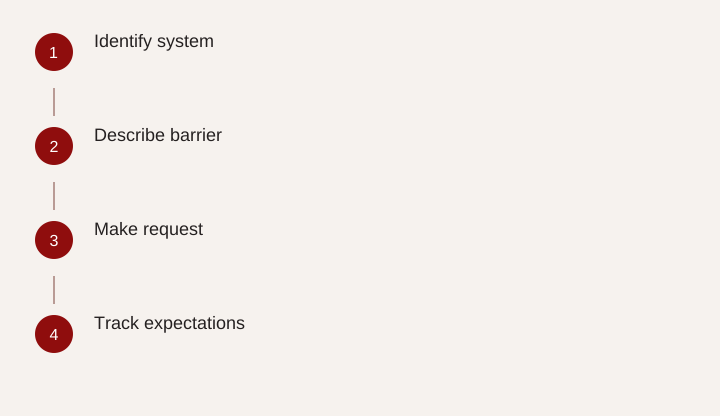
- Identify system
- Describe barrier
- Make request
- Track expectations
Separate probation from accommodation eligibility
A new employee may hesitate to request an adjustment because they do not want to appear difficult before proving themselves. Waiting can make a manageable barrier harder to address. The EEOC accommodation guidance explains that qualified employees may be entitled to accommodation even when the employer considers them probationary.
That does not mean every new employee is covered by every law or entitled to any requested arrangement. It means the probationary label is not a complete answer to the accommodation question. The work, limitation, employer coverage and effective options still need consideration.
Identify your actual employment system. A federal probationary appointment and a private employer's introductory period have different personnel rules. Do not assume that an internet explanation of one applies to the other, especially if a notice or proposed employment action is involved.
Describe the barrier before it becomes a vague performance issue
Focus on the task or condition causing difficulty. Explain how a medical condition affects your ability to perform the work or access a workplace benefit, and ask to discuss an adjustment. You do not need to describe every aspect of your medical history in the first message.
A hypothetical new employee may receive complex instructions only in rapid verbal briefings and have a disability-related difficulty retaining them. Asking for written instructions or another effective method provides a concrete issue to discuss. Saying only that the training is overwhelming leaves the employer uncertain about the accommodation need.
If performance has already been discussed, identify the barrier and request promptly while also responding to legitimate feedback. Do not assume an accommodation request automatically erases earlier events or eliminates the need to meet essential requirements. Ask how the employer will evaluate work once an effective arrangement is in place.
Use a new-employee preparation sheet
A short preparation sheet can make the request more specific and reduce the pressure to overexplain. Use accurate job information and label questions you cannot yet answer.
| Item | What to prepare |
|---|---|
| Employment setting | Federal agency, other public employer or private employer. |
| Relevant duty | The task or benefit affected by the barrier. |
| Functional problem | What becomes difficult under which conditions. |
| Possible adjustment | One or more options and how they might help. |
| Current expectations | Training milestones, deliverables and feedback already received. |
| Process contact | Supervisor, HR or designated accommodation coordinator. |
| Next review | How the request and work performance will be followed up. |
The sheet is not an argument that standards should disappear. It helps connect the adjustment to the work the employer needs you to perform.
Make the request through the appropriate route
Check whether the employer identifies an accommodation contact. If you begin with a supervisor, ask how the request will be routed and who will respond. A written summary can help establish the date and substance of the request even when the first conversation is verbal.
You might write: “Because of a medical condition, I am having difficulty with [specific work condition]. I would like to discuss [adjustment or options] so I can perform [duty]. Please identify the next step and any relevant supporting information needed.”
For federal telework requests, consult the current EEOC/OPM federal guidance rather than assuming remote work is automatic. It emphasizes individual assessment of limitations, essential duties and effective alternatives. The federal source should not be treated as a private employer's internal procedure.
Keep performance expectations visible
Ask the supervisor to clarify priorities, training support and the measures used to assess your work. This benefits any new employee and is especially useful when a disability-related barrier may be affecting a specific task. A clear expectation is easier to address than repeated statements that you need to improve generally.
Document what support was provided and whether the proposed adjustment changes your ability to meet the requirement. If an option is ineffective, explain the observed problem promptly. Avoid waiting until the end of a review period to mention that it did not work.
The EEOC retaliation resource identifies accommodation requests as relevant protected activity, while making clear that protection does not excuse legitimate work obligations. Keep those ideas together: the request should be considered appropriately, and the employee should understand what performance is expected with an effective accommodation.
Respond promptly to process or employment concerns
If someone says probationary employees cannot request accommodations, ask the designated office to review that statement. Record the words, date and any resulting action. Do not rely only on a coworker's reassurance that the statement must be wrong; obtain a response from the appropriate process.
If a federal employee believes discrimination is involved, the federal EEO overview describes the general counselor-contact requirement. Other employment settings have different routes. A serious personnel notice may also involve additional procedural questions requiring prompt individualized advice.
The practical goal is to make the accommodation need clear while preserving an accurate record of training, expectations and responses. Probation can be stressful, but silence is not a reliable strategy for a barrier that affects the work. A focused request gives the employer something concrete to assess and gives you a clear next step to follow.
Related questions
Do I have to wait until probation ends to request an accommodation?
EEOC accommodation guidance states that qualified employees can be entitled to accommodation even when considered probationary. The actual coverage, qualification and need still matter.
Does an accommodation request guarantee that I pass probation?
No. Accommodation consideration and legitimate performance expectations are separate questions. Federal and private employment protections and procedures also differ.
Sources & further reading
Primary references
- Enforcement Guidance on Reasonable Accommodation and Undue Hardship under the ADA
- Frequently Asked Questions from the Federal Sector about Telework Accommodations for Disabilities
- Overview of Federal Sector EEO Complaint Process
- Retaliation
Community questions behind this guide
These discussions informed the question and language. Personal accounts are not verified facts or professional advice. Read our method.